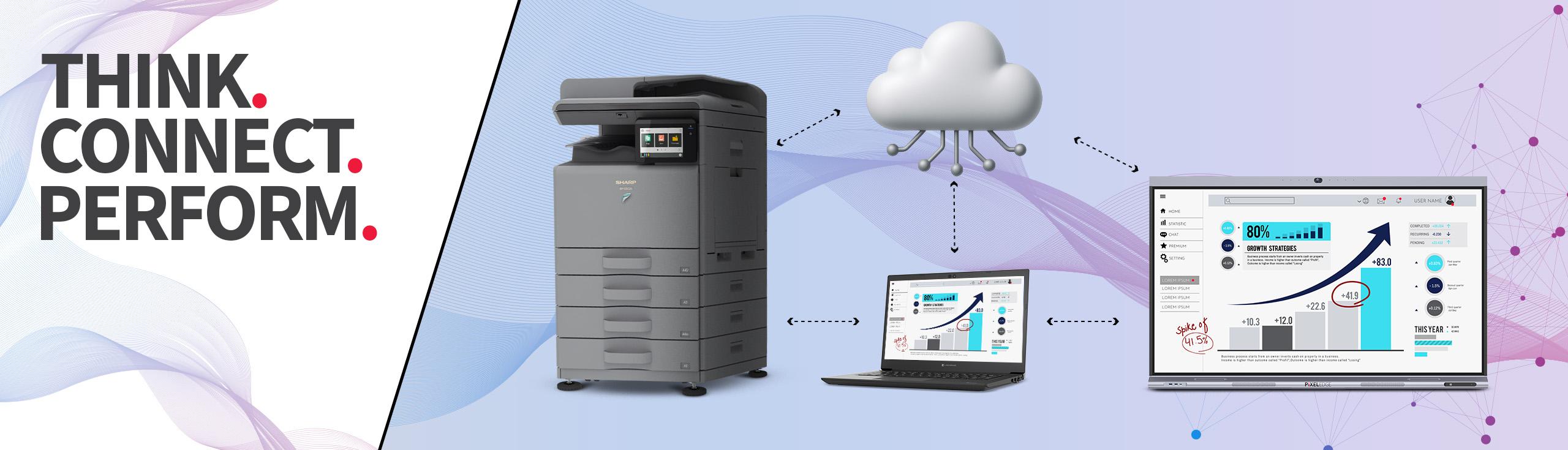
Digital transformation today goes far beyond adopting new software or moving data to the cloud. For modern enterprises, it is about reimagining how people collaborate, communicate, and execute work—both in physical offices and hybrid environments. Office and visual technologies play a critical role in enabling this shift by creating smarter, more connected, and more efficient workplaces.
Traditional offices were built around paper-based workflows, isolated meeting rooms, and fixed workstations. In contrast, digitally transformed workplaces are designed to be flexible, collaborative, and data-driven. Technologies such as interactive displays, collaborative boards, and connected multifunction printers (MFPs) act as the backbone of this evolution, seamlessly integrating people, devices, and information.
Interactive displays and collaborative boards are redefining how teams work together. In meeting rooms, classrooms, and boardrooms, these solutions enable:
For enterprises, this means more productive meetings, better engagement, and reduced dependency on multiple disconnected tools.
Modern printers are no longer standalone output devices. Connected MFPs are central to digital transformation by bridging the gap between physical and digital documents. Key capabilities include:
These features streamline workflows, reduce manual intervention, and support hybrid work models where employees are not always tied to a single location.
By integrating office and visual technologies into a unified ecosystem, businesses can significantly improve operational efficiency. Automated document workflows reduce turnaround time, collaborative tools minimize communication gaps, and connected devices ensure uninterrupted productivity—even in distributed work environments. This level of efficiency is especially critical for sectors such as corporates, education, healthcare, IT, and manufacturing, where collaboration, data accuracy, and uptime directly impact performance and customer outcomes.
Digital transformation also aligns with sustainability goals. Paper reduction through digitization, energy-efficient devices, and optimized print management help organizations lower costs while reducing their environmental footprint. Smart office technologies enable businesses to work responsibly without compromising productivity
